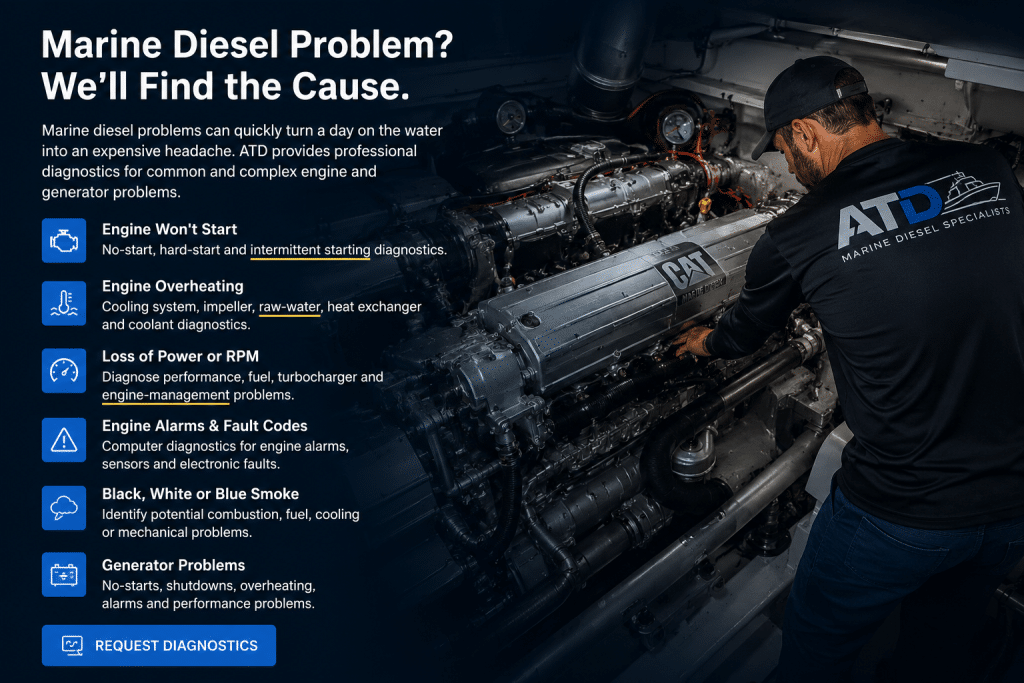
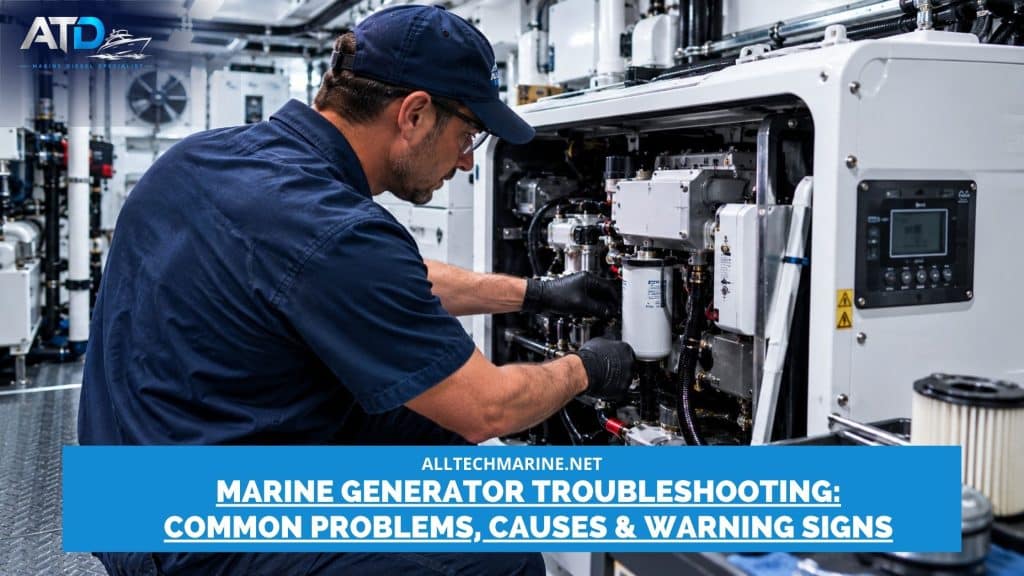
A marine generator can appear to be working perfectly until the moment you need it most. Then it suddenly won’t start, starts but shuts down, overheats, produces abnormal smoke, trips a breaker, or runs without supplying the power your boat needs.
The challenge is that the symptom doesn’t always identify the failed component.
A generator that won’t start could have a battery, fuel, electrical, safety-shutdown, or engine problem. A generator that starts and then stops may be reacting to low oil pressure, high temperature, fuel starvation, or another protective shutdown condition.
Effective marine generator troubleshooting starts by understanding what the generator is doing, when the problem occurs, and which system could produce that behavior.
What Are the Most Common Marine Generator Problems?
Common marine generator problems include failure to start, starting and then shutting down, overheating, reduced or unstable electrical output, abnormal smoke, excessive vibration, fluid leaks, battery or starting-system problems, fuel restrictions, and recurring shutdown alarms.
Because marine generators combine a diesel engine with an electrical generating system, troubleshooting may involve both the engine side and the electrical side of the unit.
ATD provides marine generator repair for boat owners throughout Southwest Florida.
1. Marine Generator Won’t Start
A generator that won’t start is one of the most common problems boat owners encounter, but “won’t start” can describe several different conditions.
The first distinction is whether the generator:
- Does nothing when the start switch is pressed
- Clicks but doesn’t crank
- Cranks slowly
- Cranks normally but doesn’t start
- Starts briefly and immediately stops
Each behavior points troubleshooting in a different direction.
Generator Doesn’t Crank
If the generator doesn’t crank at all, possible causes include:
- Discharged battery
- Battery switch position
- Corroded or loose battery connections
- Damaged cables
- Blown fuse or circuit protection
- Start switch or control issue
- Starter solenoid problem
- Starter motor problem
- Safety or shutdown circuit
Generator Cranks but Won’t Start
If the starter turns the engine normally but the generator doesn’t fire, possible areas to investigate include:
- Fuel supply
- Fuel shutoff
- Fuel filters
- Air in the fuel system
- Contaminated fuel
- Fuel pump
- Glow plugs or preheat system, when equipped
- Engine controls
- Sensors or shutdown circuits
- Compression-related problems
Understanding the difference between no crank and crank/no-start can prevent unnecessary parts replacement.
For a more focused guide, see why a marine generator won’t start.
2. Generator Starts and Then Shuts Down
A marine generator that starts normally and then shuts down presents a different diagnostic problem.
The fact that it started tells you that at least some portions of the starting and fuel systems were functioning initially.
Now the question becomes: what changed after startup?
Possible causes include:
- Restricted fuel supply
- Clogged fuel filter
- Air entering the fuel system
- Low oil pressure
- High coolant temperature
- Insufficient raw-water flow
- Faulty sensor
- Shutdown switch
- Electrical overload
- Control-system fault
Many marine generators incorporate protective shutdown systems designed to stop the engine when potentially damaging conditions are detected.
The shutdown may therefore be the generator protecting itself rather than the shutdown system being the underlying problem.
Learn more about why a marine generator may start and then shut down.
3. Marine Generator Is Overheating
Marine generators use cooling systems similar in principle to propulsion diesel engines.
Many installations rely on a combination of closed-loop coolant and raw seawater.
Potential causes of generator overheating include:
- Blocked raw-water intake
- Closed or restricted seacock
- Dirty sea strainer
- Damaged raw-water impeller
- Restricted heat exchanger
- Low coolant
- Coolant leak
- Thermostat problem
- Damaged hose
- Raw-water pump problem
One useful clue can be the amount of cooling water exiting with the generator exhaust.
If exhaust-water flow has noticeably decreased, the raw-water side of the system deserves attention.
Never remove a coolant or pressure cap while the generator is hot.
4. Generator Shuts Down Under Load
A generator that runs normally with little or no electrical load but shuts down after appliances are turned on may be experiencing a load-related problem.
Possible areas to investigate include:
- Excessive electrical load
- Fuel-delivery restriction
- Cooling-system limitation
- Engine performance problem
- Electrical generating problem
- Protective shutdown condition
The generator engine has to produce enough mechanical power to maintain operating speed as electrical demand increases.
A marginal fuel or cooling system may therefore appear normal while the generator is lightly loaded but fail once demand increases.
This is one reason operating a generator only at idle or with little load doesn’t always reveal developing problems.
5. Generator Runs but Produces No AC Power
Sometimes the diesel engine itself runs normally, but the vessel receives little or no electrical power.
At that point, troubleshooting moves beyond basic engine operation.
Possible areas to evaluate can include:
- Generator breaker
- Vessel electrical breakers
- Connections
- Wiring
- Voltage regulation
- Alternator/generator components
- Control system
- Electrical protection systems
Electrical troubleshooting can involve dangerous voltages and should be performed by qualified personnel when testing requires access to energized components.
Don’t assume that a running engine means the entire generator system is functioning correctly.
6. Generator Voltage or Frequency Is Unstable
Sensitive onboard equipment depends on the generator supplying electrical power within appropriate operating parameters.
Problems may show up as:
- Lights flickering
- Appliances behaving abnormally
- Breakers tripping
- Voltage fluctuating
- Frequency varying
- Generator speed hunting or surging
Because electrical frequency is related to generator engine speed on many systems, unstable engine RPM can affect electrical output.
Possible causes may involve:
- Fuel delivery
- Governor operation
- Engine speed
- Electrical load
- Voltage regulation
- Generator controls
This is an example of why marine generator troubleshooting often requires understanding both the diesel engine and electrical sides of the system.
7. Generator Is Producing Black Smoke
Black exhaust smoke generally indicates incomplete combustion where the engine is receiving more fuel than it can efficiently burn with the available air.
Possible causes include:
- Excessive generator load
- Restricted air intake
- Fuel-system problems
- Injector issues
- Engine operating problems
Pay attention to when the smoke occurs.
Black smoke that appears only when a large electrical load is applied provides different diagnostic information from smoke that is present continuously.
Persistent abnormal smoke should be investigated rather than assumed to be normal diesel operation.
8. Generator Is Producing White Smoke
White exhaust can have different causes depending on whether the generator is cold, warm, under load, or experiencing another problem.
Potential causes may include:
- Unburned fuel
- Low combustion temperature
- Injector issues
- Compression-related problems
- Coolant-related conditions
- Water vapor
A small amount of visible exhaust during cold startup may behave differently from persistent white smoke after the generator has reached operating temperature.
The operating conditions surrounding the symptom matter.
9. Generator Is Producing Blue Smoke
Blue or blue-gray exhaust typically suggests that oil is entering the combustion process.
Possible causes can involve:
- Internal engine wear
- Valve-related issues
- Oil level problems
- Other conditions allowing oil into the combustion chamber
Persistent blue smoke should be evaluated, particularly if it appears alongside increasing oil consumption.
As with propulsion engines, exhaust color is a diagnostic clue—not a complete diagnosis by itself.
10. Generator Is Surging or Hunting
A generator that repeatedly speeds up and slows down may be described as surging or hunting.
This can sometimes be heard before it is noticed on electrical equipment.
Potential areas to investigate include:
- Fuel restriction
- Air in the fuel system
- Fuel quality
- Governor operation
- Engine controls
- Changing electrical load
Because stable engine speed is important for proper generator output, significant surging should not be ignored.
11. Generator Is Leaking Oil, Coolant, Fuel, or Seawater
Regularly inspect the generator and surrounding area for fluid leaks.
Look for:
- Engine oil
- Diesel fuel
- Coolant
- Seawater
- Unusual residue
A small leak can provide an early warning of a developing problem.
For example:
Coolant loss can eventually lead to overheating.
Raw-water leakage may indicate a hose, clamp, pump, or other cooling-system problem.
Fuel leakage presents a safety concern and should be addressed promptly.
Oil leakage can lead to low engine-oil levels if ignored.
Instead of repeatedly topping off fluids, identify why the level is decreasing.
12. Generator Is Making Unusual Noises or Vibrating
Boat owners often become familiar with the normal sound of their generator.
Changes are worth investigating.
Watch and listen for:
- New rattling
- Knocking
- Squealing
- Grinding
- Excessive vibration
- Changes in exhaust sound
Possible causes can range from loose components and worn mounts to belt problems or internal mechanical issues.
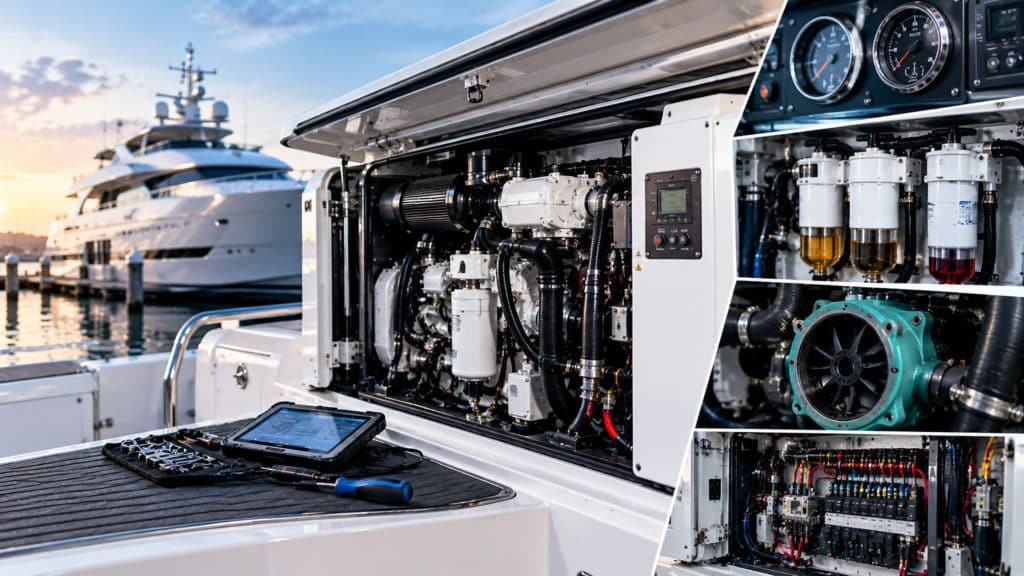
A sudden change is particularly important if it occurs alongside another symptom such as low oil pressure, overheating, smoke, or unstable operation.
Marine Generator Troubleshooting by Symptom
| Generator Symptom | Possible Areas to Investigate |
| Does not crank | Battery, connections, starter, controls, fuse/protection |
| Cranks but won’t start | Fuel supply, filters, air in fuel, preheat, controls |
| Starts then shuts down | Fuel, oil pressure, cooling system, sensors, shutdown circuit |
| Overheats | Intake, strainer, impeller, coolant, heat exchanger |
| Shuts down under load | Overload, fuel delivery, cooling, engine performance |
| Runs but no AC output | Breakers, wiring, generator components, voltage regulation |
| Unstable voltage/frequency | Engine speed, governor, fuel, electrical controls |
| Black smoke | Excessive load, airflow, fuel system, injectors |
| White smoke | Unburned fuel, compression, temperature, coolant-related issue |
| Blue smoke | Oil consumption or internal engine condition |
| Surging | Fuel delivery, governor, controls, changing load |
| Fluid leak | Hoses, seals, fittings, pumps, cooling or fuel components |
These are possible troubleshooting areas rather than diagnoses. Several different failures can produce similar symptoms.
Why Marine Generator Load Testing Matters
A generator can start, run, and sound normal while still having a problem that only becomes apparent under electrical load.
That’s why load testing can be useful.
A proper load test evaluates how the generator performs as electrical demand is applied.
Depending on the system and test, technicians may observe:
- Engine performance
- Generator temperature
- Voltage
- Frequency
- Stability
- Exhaust behavior
- Cooling-system performance
- Response to increasing load
A generator that performs normally with almost nothing turned on may behave very differently when air conditioning, refrigeration, battery chargers, water heaters, and other equipment create substantial demand.
Our knowledge base explains why a marine generator should be load tested.
Don’t Keep Resetting a Generator That Shuts Down
If a generator repeatedly shuts itself down, don’t simply keep restarting it without investigating why.
Protective shutdown systems may be responding to:
- Low oil pressure
- Excessive temperature
- Another monitored fault
Repeatedly restarting the generator without correcting the underlying condition could potentially turn a manageable problem into a more expensive repair.
The goal is not simply to make the generator run again.
The goal is to determine why it stopped.
Start With the Simple Observations
Before jumping to complicated conclusions, collect basic information about the problem.
Ask:
Does the generator crank?
Does it start?
How long does it run?
Does it shut down only when a load is applied?
Are there alarms or fault indicators?
Is exhaust-water flow normal?
Is the generator overheating?
Is there abnormal smoke?
Are any fluids leaking?
Was maintenance performed recently?
These observations can dramatically narrow the diagnostic process.
When Should You Call for Marine Generator Repair?
Professional diagnosis is appropriate when:
- The generator will not start
- It repeatedly shuts down
- It overheats
- Oil pressure is abnormal
- There is a fuel or coolant leak
- Electrical output is absent or unstable
- It repeatedly trips protection
- It produces persistent abnormal smoke
- It develops unusual mechanical noise
- A problem returns after basic maintenance
- The cause cannot be confidently identified
ATD provides marine generator repair for diesel generators and related systems.
Can Regular Maintenance Prevent Generator Problems?
Many generator failures cannot be predicted perfectly, but preventive maintenance can significantly improve reliability and create opportunities to identify developing issues.
Marine generator maintenance may include:
- Engine oil and filter changes
- Fuel-filter service
- Raw-water impeller inspection or replacement
- Cooling-system inspection
- Coolant service
- Belt inspection
- Hose inspection
- Battery and connection checks
- Leak inspection
- Operational testing
- Load testing when appropriate
ATD provides marine generator maintenance for boat owners who want to keep their generator ready for use rather than waiting for a failure.
The next article in this series will cover generator maintenance in much greater detail.
Marine Generator Problems in Southwest Florida
Marine generators in Southwest Florida operate in an environment that can be demanding on both diesel and cooling systems.
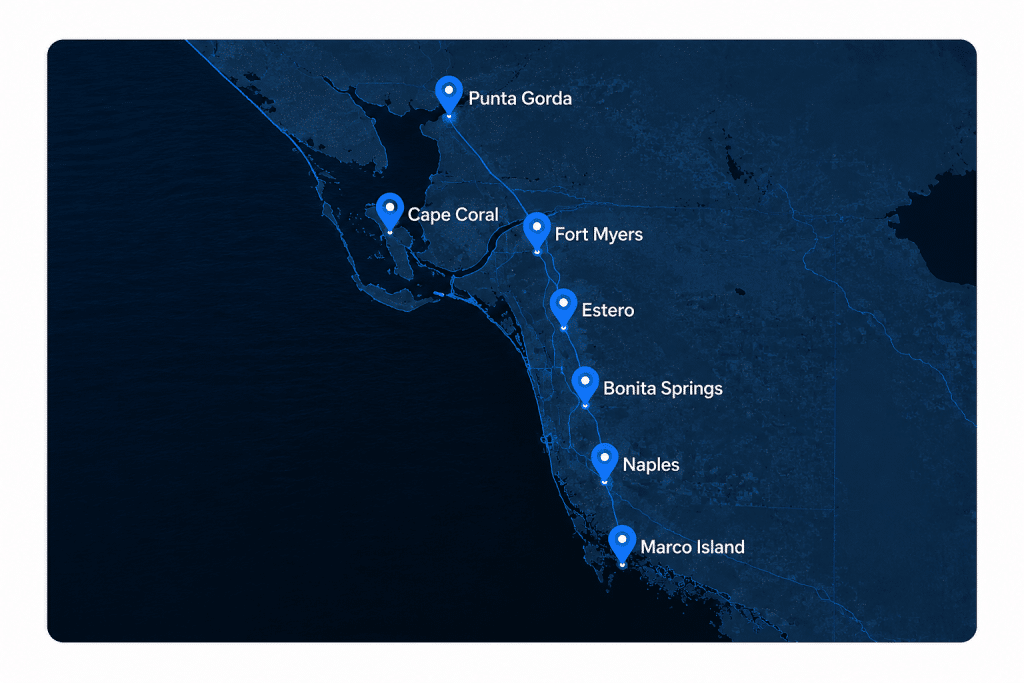
Boats in Naples, Marco Island, Bonita Springs, Estero, and Fort Myers regularly encounter:
- Warm temperatures
- Saltwater exposure
- High humidity
- Marine growth
- Periods of limited vessel use
Raw-water cooling components can accumulate scale, corrosion, debris, or marine growth.
Generators that aren’t used regularly can also develop problems even though the hour meter remains low.
A generator with very few operating hours is not necessarily a generator that requires little maintenance.
Generator Brands ATD Services
ATD Marine Diesel Specialist works with major marine generator systems, including:
- Northern Lights
- Westerbeke
- Kohler
- Onan
Service requirements and diagnostic procedures vary between manufacturers and models, so the generator’s specific service information should be used when determining maintenance intervals and troubleshooting procedures.
Frequently Asked Questions About Marine Generator Problems
Why won’t my marine generator start?
A marine generator may fail to start because of a discharged battery, poor electrical connection, starter problem, fuel restriction, air in the fuel system, contaminated fuel, preheat problem, control issue, safety shutdown, or mechanical engine problem. Determining whether the generator cranks normally is one of the first troubleshooting steps.
Why does my boat generator start and then shut off?
A generator that starts and then stops may be experiencing fuel starvation, low oil pressure, overheating, insufficient raw-water flow, a sensor problem, or another protective shutdown condition. The timing of the shutdown and any alarm or fault information can help identify the cause.
Why does my marine generator shut down when I turn on the air conditioning?
A shutdown that occurs when a significant electrical load is applied may involve excessive load, inadequate fuel delivery, insufficient cooling, engine-performance problems, or an electrical generating issue. Testing the generator under load can help determine what changes when demand increases.
Why is my marine generator overheating?
Common causes include a blocked raw-water intake, dirty sea strainer, damaged impeller, low coolant, restricted heat exchanger, thermostat problem, raw-water pump problem, or another cooling-system restriction.
Should I run my marine generator regularly?
Generators generally benefit from appropriate operation and maintenance rather than remaining unused for extended periods. Follow the generator manufacturer’s recommendations regarding operation, exercising, loading, and service intervals for your specific model.
Need Marine Generator Repair in Southwest Florida?
A generator problem can quickly affect air conditioning, refrigeration, battery charging, appliances, and other essential onboard systems.
ATD Marine Diesel Specialist provides mobile marine generator diagnostics and repair throughout Naples, Marco Island, Bonita Springs, Estero, Fort Myers, and surrounding Southwest Florida waters.
Whether your generator won’t start, repeatedly shuts down, overheats, produces abnormal smoke, or isn’t supplying power correctly, ATD can diagnose the problem and determine the appropriate repair.