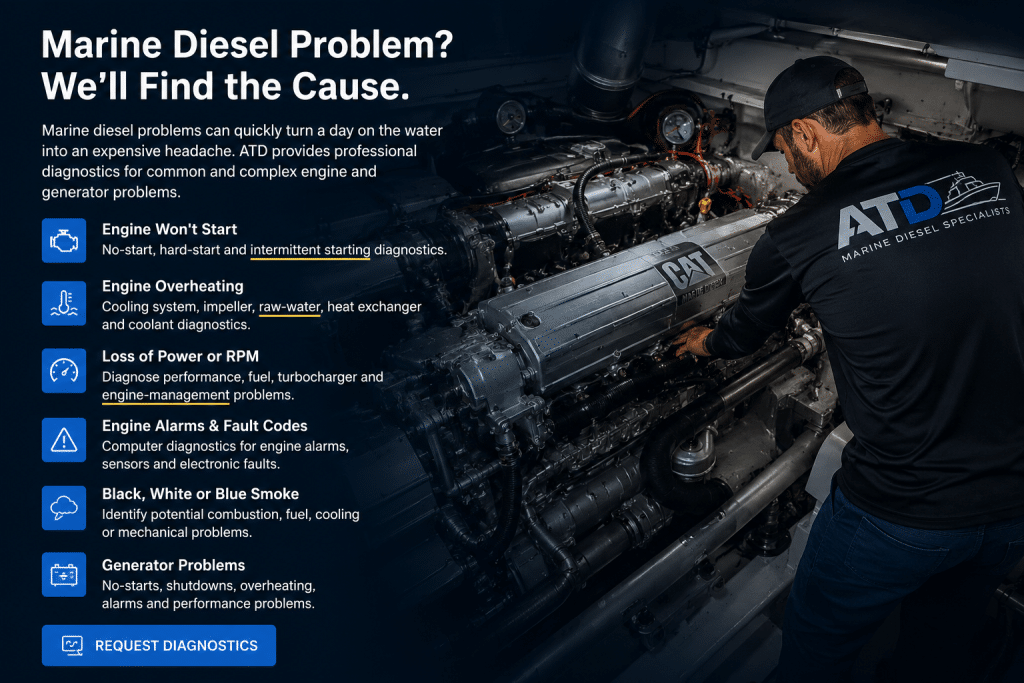
A marine diesel engine rarely develops a major problem without giving you some kind of warning. Hard starting, loss of power, abnormal exhaust smoke, rising operating temperatures, unusual vibration, fluid leaks, and engine alarms can all indicate that something needs attention.
Some symptoms have relatively simple causes. Others can point to problems with the fuel system, cooling system, electrical components, turbocharger, transmission, or the engine itself. Recognizing the warning signs early can help prevent a minor issue from becoming a much more expensive repair—or leaving you stranded on the water.
Below are 10 marine diesel engine problems and warning signs boat owners should know, along with some of the common issues that may cause them.
What Are the Most Common Signs of Marine Diesel Engine Problems?
Common warning signs of marine diesel engine problems include hard starting, loss of power, overheating, abnormal exhaust smoke, excessive vibration, unusual engine noises, fluid leaks, changes in oil pressure, fault codes, and increased fuel consumption. Because several different problems can produce similar symptoms, proper diagnosis is often necessary to identify the actual cause.
1. Your Marine Diesel Engine Is Hard to Start—or Won’t Start
A diesel engine that cranks but takes longer than normal to start deserves attention, especially if the problem is becoming progressively worse.
Possible causes include:
- Weak or discharged batteries
- Poor electrical connections
- Starter problems
- Restricted fuel filters
- Air entering the fuel system
- Contaminated fuel
- Fuel-delivery problems
- Injector issues
- Low compression
- Engine-control or sensor faults
The way the engine behaves provides useful diagnostic information. An engine that does not crank at all presents a different set of possibilities from one that cranks normally but fails to fire.
If you’re experiencing a no-start condition, our knowledge base explains several potential reasons why a marine diesel engine won’t start.
Repeatedly attempting to start an engine without determining why it isn’t firing can drain batteries and may complicate the original problem. When the cause isn’t obvious, professional marine diesel engine repair and diagnostics can help isolate whether the problem involves fuel delivery, electrical systems, compression, controls, or another component.
2. The Engine Is Losing Power
Loss of power is one of the more common—and frustrating—marine diesel symptoms because the engine may continue running while no longer producing its normal performance.
You might notice:
- The boat no longer reaches its normal cruising speed
- The engine struggles to reach expected RPM
- RPM drops under load
- Acceleration is sluggish
- The engine surges or runs inconsistently
- Performance gradually deteriorates during a trip
Fuel restrictions are one possible cause. A clogged primary or secondary fuel filter can limit the amount of fuel reaching the engine, particularly as engine demand increases.
But fuel filters aren’t the only possibility.
Restricted airflow, turbocharger problems, injector issues, contaminated fuel, exhaust restrictions, cooling problems, excessive vessel load, and other mechanical conditions can also affect performance.
For a deeper look at this symptom, read why a marine diesel engine may be losing power.
A technician should diagnose the underlying cause rather than simply replacing parts based on the symptom.
3. The Engine Is Running Hot or Overheating
An overheating marine diesel engine should never be ignored.
Unlike an automotive engine, many marine diesel engines depend on seawater moving through the raw-water side of the cooling system. A restriction or failure anywhere in that process can reduce the engine’s ability to remove heat.
Potential causes include:
- Closed or partially closed seacock
- Blocked raw-water intake
- Clogged sea strainer
- Damaged raw-water impeller
- Restricted heat exchanger
- Low coolant
- Coolant leaks
- Thermostat problems
- Damaged hoses
- Raw-water pump problems
If the temperature begins climbing above the engine’s normal operating range, reducing engine load may help prevent further temperature increase while you determine what is happening. A true overheat alarm should be treated seriously.
Never remove a coolant or pressure cap from a hot engine. The cooling system can be under pressure and hot coolant can cause severe burns.
ATD’s knowledge base explains what to do if a marine diesel engine overheats and some of the reasons why marine diesel engines overheat.
Recurring temperature problems should be properly diagnosed. ATD provides marine diesel cooling system service for problems involving raw-water flow, heat exchangers, cooling components, and overheating.
4. You See Black, White, or Blue Exhaust Smoke
Exhaust smoke can provide important clues about what is happening inside a marine diesel engine.
Black Smoke
Black smoke generally indicates incomplete combustion associated with too much fuel for the amount of air available.
Possible causes can include restricted airflow, excessive engine load, injector problems, turbocharger issues, or other air/fuel-related conditions.
White Smoke
White exhaust can have several possible causes depending on when it occurs, engine temperature, and whether what you’re seeing is actually smoke or water vapor.
Potential causes include unburned fuel, low combustion temperature, injector issues, compression problems, or coolant-related conditions.
Blue Smoke
Blue or blue-gray smoke commonly indicates that engine oil is entering the combustion process.
Possible sources can include worn internal engine components, valve-related issues, turbocharger problems, or excessive oil.
The color alone isn’t enough to diagnose the engine. When the smoke occurs—at startup, idle, acceleration, cruise, or heavy load—can provide additional diagnostic clues.
Persistent or newly developed exhaust smoke is worth investigating rather than assuming it is simply normal behavior for a diesel engine.
5. The Engine Is Vibrating More Than Normal
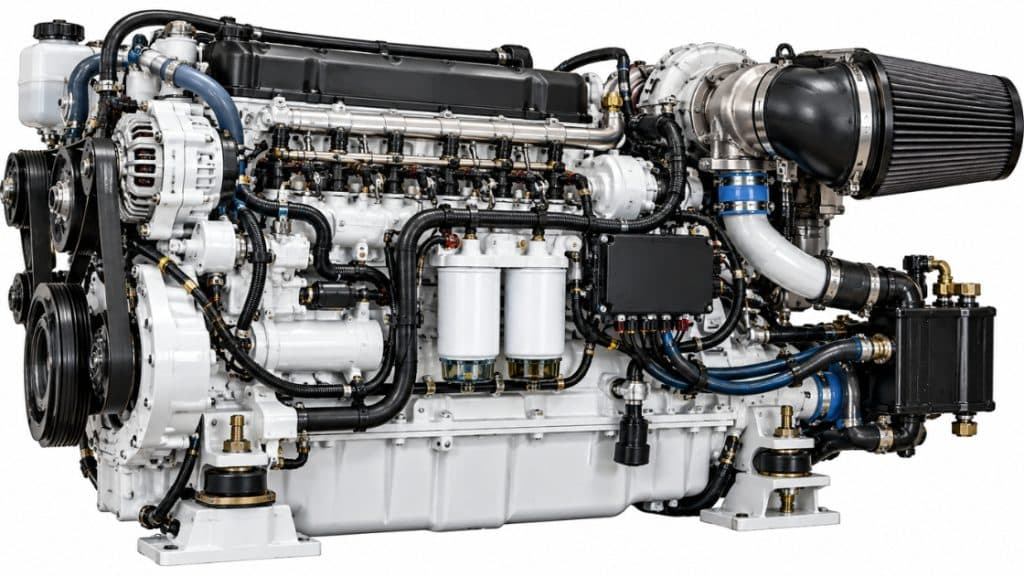
Every marine diesel engine produces some vibration, but a noticeable change from the vessel’s normal behavior should be investigated.
The source may not necessarily be the engine itself.
Possible causes include:
- Engine mount problems
- Propeller damage or fouling
- Bent or misaligned running gear
- Shaft alignment issues
- Coupling problems
- Transmission issues
- Uneven engine operation
- A cylinder that is not contributing properly
One important clue is when the vibration occurs.
If vibration appears primarily after shifting into gear, the transmission, shaft, propeller, alignment, or other driveline components may need to be considered. Our knowledge base provides more information about why a boat may vibrate when it is in gear.
If transmission symptoms are suspected, ATD also provides marine transmission repair and diagnostics.
6. You Hear New or Unusual Engine Noises
Boat owners become familiar with how their engines normally sound. A new knock, rattle, squeal, grinding noise, or other unusual sound can therefore be an important early warning.
The location and type of noise matter.
A squealing sound may indicate a belt or accessory-drive problem, while rattling could come from loose components, mounts, or other mechanical sources. Knocking or metallic noises can potentially indicate more serious engine problems.
Don’t assume an unfamiliar noise will disappear on its own.
Pay attention to:
- When the noise started
- Whether it occurs at idle or under load
- Whether it changes with RPM
- Whether it occurs in neutral, in gear, or both
- Whether any alarms or other symptoms appeared at the same time
These observations can be extremely useful when diagnosing the problem.
7. You Notice Fuel, Oil, Coolant, or Other Fluid Leaks
A clean engine room makes leaks easier to spot, which is one reason regular visual inspections are valuable.
Look underneath and around the engines for signs of:
- Engine oil
- Diesel fuel
- Coolant
- Transmission fluid
- Seawater
- Unusual residue around hoses, fittings, pumps, or gaskets
Even a small leak deserves investigation.
A fuel leak presents an obvious safety concern. A coolant or seawater leak can eventually contribute to overheating. An oil leak can become more serious if the engine loses enough lubricant.
The color, smell, consistency, and location of the fluid can help identify where it originated.
Rather than simply topping off a low fluid level repeatedly, determine why the level is dropping.
8. An Oil Pressure Alarm Comes On
Proper oil pressure is critical to protecting a diesel engine’s internal components.
An oil-pressure warning may be caused by something relatively straightforward, such as a faulty sender or electrical issue, but it can also indicate low oil level, loss of oil pressure, lubrication problems, or an internal engine condition.
Because of the potential consequences, an oil-pressure alarm should not be dismissed without determining its cause.
If an oil-pressure alarm occurs while underway, follow the engine manufacturer’s procedures and avoid continuing to operate an engine that may have inadequate lubrication.
Our knowledge base explains what to do if a marine diesel oil pressure alarm comes on.
Oil condition can also reveal valuable information about engine health. In some situations, marine diesel engine oil analysis can identify abnormal wear metals, contamination, coolant intrusion, fuel dilution, and other conditions that may not be obvious during a visual inspection.
9. You’re Getting Engine Fault Codes or Repeated Alarms
Modern electronically controlled marine diesel engines can monitor numerous operating parameters and generate fault codes when the engine-management system detects a problem.
Depending on the engine, these can involve:
- Engine temperature
- Oil pressure
- Fuel pressure
- Boost pressure
- Electrical voltage
- Sensors
- Engine controls
- Communication faults
- Other operating conditions
A fault code is an important diagnostic clue, but it does not always mean that the component named by the code itself has failed.
For example, a sensor-related fault could potentially involve the sensor, wiring, connector, power supply, or the condition the sensor is designed to monitor.
That’s why simply replacing the component mentioned by a fault code can result in unnecessary parts replacement without fixing the actual problem.
Learn more about what marine diesel fault codes really mean.
Professional diagnostics can combine fault-code information with physical inspections, operating data, testing, and the engine’s symptoms to determine the underlying cause.
10. Fuel Consumption or Engine Performance Has Changed
A gradual change in fuel consumption can be easy to overlook.
If the boat is suddenly burning noticeably more fuel to maintain the same speed and operating conditions, something may have changed.
Potential factors include:
- Dirty hull or running gear
- Propeller problems
- Excessive vessel load
- Fuel-system problems
- Injector issues
- Restricted airflow
- Turbocharger problems
- Engine operating temperature
- Mechanical wear
- Changes in how the vessel is being operated
Fuel consumption alone doesn’t identify the cause, but when combined with other symptoms—such as smoke, reduced RPM, loss of speed, or difficult starting—it can provide another useful diagnostic clue.
Problems involving contaminated fuel, restricted filters, water in fuel, or other delivery issues can also affect engine performance. ATD provides marine diesel fuel system service for diagnosing and correcting fuel-related engine problems.
Marine Diesel Symptoms: What They May Tell You
| Warning Sign | Possible Areas to Investigate |
| Hard starting or no-start | Batteries, electrical system, fuel delivery, injectors, compression |
| Loss of power | Fuel filters, airflow, turbocharger, injectors, engine load |
| Overheating | Raw-water system, impeller, heat exchanger, coolant system |
| Black smoke | Air restriction, excessive load, fuel delivery, turbocharger |
| White smoke | Unburned fuel, combustion temperature, compression, coolant |
| Blue smoke | Oil entering the combustion process, internal wear, turbocharger |
| Excessive vibration | Mounts, alignment, shaft, propeller, transmission, engine operation |
| Fluid leaks | Hoses, fittings, seals, gaskets, pumps, cooling components |
| Oil-pressure alarm | Oil level, lubrication system, sender/sensor, internal engine condition |
| Fault codes | Sensors, wiring, controls, or monitored engine systems |
These are possible causes rather than diagnoses. Different problems can create similar symptoms, which is why proper troubleshooting is important before replacing components.
When Should You Call a Marine Diesel Technician?
Not every unusual engine behavior means that a major repair is required. However, professional diagnosis is a good idea when:
- A warning or shutdown alarm occurs
- The engine repeatedly overheats
- Oil pressure is abnormal
- The engine will not start
- Power loss is significant or recurring
- Abnormal smoke persists
- A fuel or oil leak is present
- The engine develops a new mechanical noise
- Fault codes repeatedly return
- You cannot confidently identify the cause of the problem
Early diagnosis can be especially valuable because one problem can sometimes lead to another. A cooling-system issue that is ignored, for example, can become much more serious if the engine is repeatedly operated while overheating.
Preventing Marine Diesel Engine Problems
The best marine diesel repair is often the one you can prevent.
Regular marine diesel engine maintenance can help identify worn components, deteriorating hoses, cooling-system restrictions, fuel problems, leaks, and other developing issues before they result in an unexpected breakdown.
Boat owners should also pay attention to changes in how the vessel operates. Know the engine’s normal temperature, oil pressure, RPM, exhaust appearance, sound, and vibration characteristics.
Those normal operating conditions provide a baseline. When something changes, you’ll recognize it sooner.
For boats that aren’t used frequently, don’t assume low engine hours eliminate the need for maintenance. ATD’s knowledge base explains why low-hour marine diesel engines still need annual service.
Keeping good marine diesel maintenance records can also help track recurring problems, service intervals, repairs, and changes in engine condition over time.
Frequently Asked Questions About Marine Diesel Engine Problems
What are the first signs of a marine diesel engine problem?
Changes from the engine’s normal operation are often the earliest warning. These can include harder starting, reduced power, unusual smoke, higher operating temperature, new vibration, abnormal noises, leaks, or warning alarms. A change doesn’t necessarily indicate a major failure, but recurring or worsening symptoms should be investigated.
Why does my marine diesel engine lose power under load?
Power loss under load can be caused by restricted fuel delivery, clogged filters, contaminated fuel, restricted airflow, turbocharger problems, injector issues, excessive engine or vessel load, and other mechanical conditions. Because several problems can produce the same symptom, diagnosis should consider when the power loss occurs and any accompanying smoke, temperature changes, alarms, or RPM limitations.
Is it safe to run a marine diesel engine that is overheating?
Continuing to operate an engine that is genuinely overheating can risk serious damage. Follow the engine manufacturer’s procedures, reduce load or shut the engine down when appropriate, and allow it to cool before inspection. Never remove a pressurized cooling-system cap while the engine is hot.
What does black smoke from a marine diesel engine mean?
Black exhaust smoke generally indicates incomplete combustion where the engine is receiving more fuel than it can efficiently burn with the available air. Possible causes include excessive engine load, restricted airflow, injector problems, turbocharger issues, or other fuel/air-related conditions.
Should I keep running my engine if an alarm comes on?
An engine alarm should not simply be ignored or silenced without identifying what triggered it. Temperature and oil-pressure alarms can indicate conditions capable of damaging the engine. Follow the engine manufacturer’s recommendations and have recurring or unexplained alarms properly diagnosed.
Need Marine Diesel Engine Diagnostics in Southwest Florida?
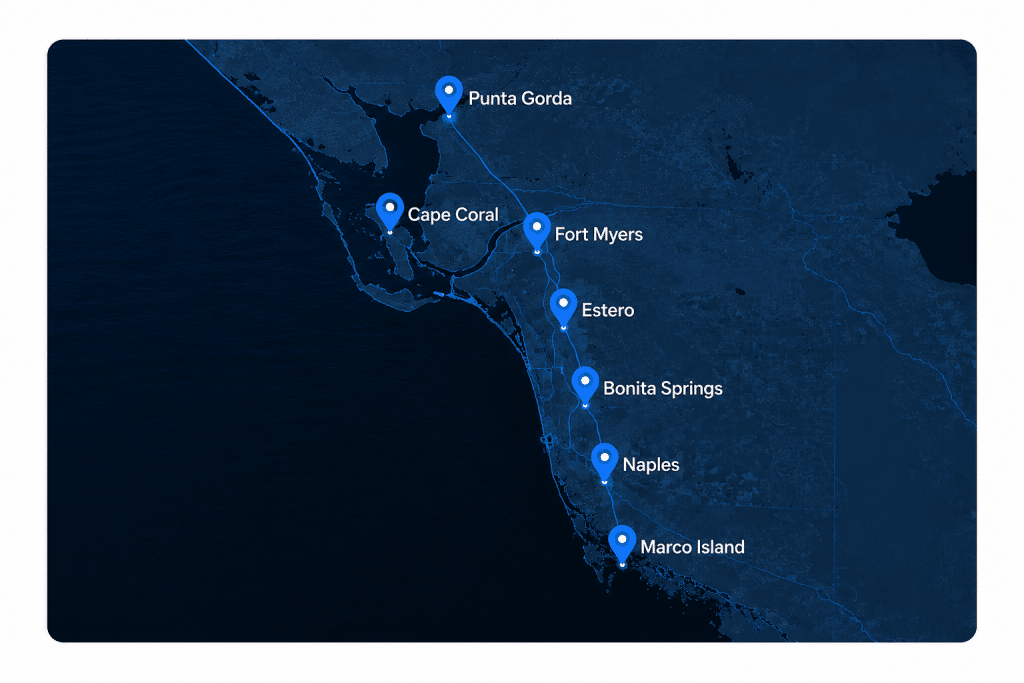
ATD Marine Diesel Specialist provides mobile marine diesel engine diagnostics, maintenance, and repair for boat owners throughout Naples, Marco Island, Bonita Springs, Estero, Fort Myers, and surrounding Southwest Florida waters.
If your engine is hard to start, losing power, overheating, smoking, producing unusual noises, displaying fault codes, or showing other signs of trouble, ATD can help determine the cause and recommend the appropriate repair.