Marine diesel engines are built for durability, but reliability depends heavily on proper maintenance. Oil and filters need to be changed, fuel needs to stay clean, raw-water components need attention, cooling systems need inspection, and belts, hoses, fluids, and other components should be checked before they become sources of trouble.
One of the biggest mistakes boat owners can make is basing maintenance entirely on engine hours. Marine engines operate in a demanding environment, and components can deteriorate from age, corrosion, heat, saltwater exposure, and long periods of inactivity even when relatively few hours are accumulated.
A good marine diesel maintenance program combines manufacturer-recommended engine-hour intervals with calendar-based inspections and preventive service.
This guide covers the major systems and maintenance items boat owners should understand.
What Does Marine Diesel Engine Maintenance Include?
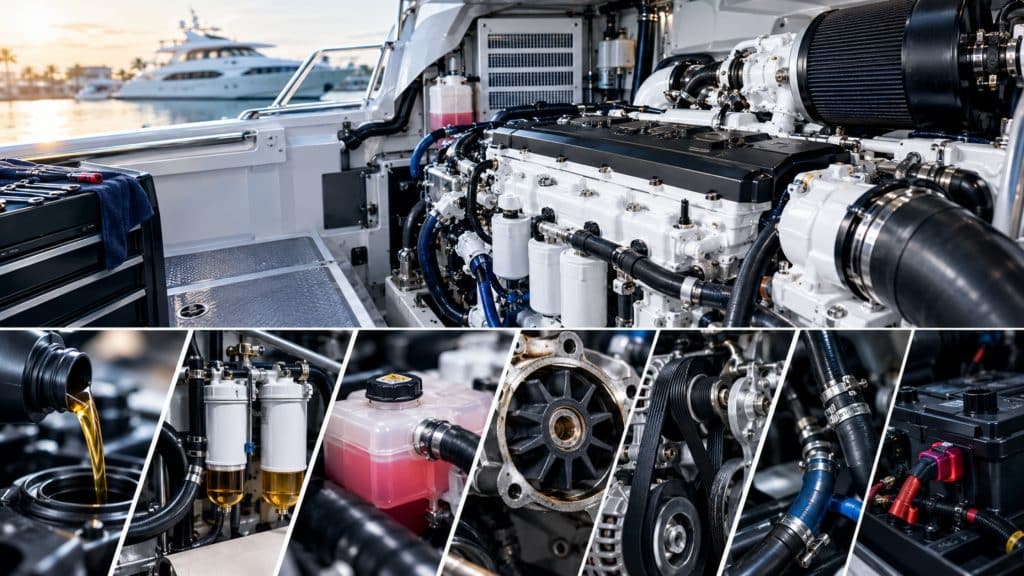
Marine diesel engine maintenance typically includes engine oil and filter changes, fuel-filter replacement, cooling-system inspection, raw-water impeller service, coolant checks, belt and hose inspections, battery and electrical checks, fluid inspections, leak checks, and monitoring overall engine condition.
The exact maintenance schedule depends on the engine manufacturer, model, operating hours, vessel use, and operating environment.
ATD provides marine diesel engine maintenance for diesel-powered boats and yachts throughout Southwest Florida.
Why Marine Diesel Maintenance Matters
Preventive maintenance isn’t just about extending engine life. It gives you opportunities to identify developing problems before they become failures on the water.
For example, an aging raw-water impeller may still be moving enough water to keep the engine cool today, while already showing deterioration that could eventually cause it to fail.
A deteriorating hose might not be leaking yet.
A partially restricted fuel filter might allow the engine to run normally at idle but begin starving it for fuel under heavy load.
Regular inspections can catch these types of problems before they lead to overheating, loss of power, a no-start condition, or an unexpected breakdown.
Maintenance also establishes a history for the engine. Consistent marine diesel maintenance records help document what was serviced, when it was performed, and whether recurring issues are developing.
Engine Hours vs. Calendar-Based Maintenance
Marine diesel maintenance schedules commonly contain both engine-hour and calendar-based service intervals.
That distinction matters.
A boat that accumulates hundreds of engine hours each year may reach an hour-based service interval quickly. Another boat might only run 50 hours during the same period but still require annual service.
Why?
Because fluids and components continue aging while the boat sits.
Time can affect:
- Engine oil
- Coolant
- Fuel
- Rubber hoses
- Belts
- Raw-water impellers
- Seals
- Batteries
- Electrical connections
- Corrosion-prone components
This is especially relevant for recreational vessels that spend much of the year at the dock.
Our knowledge base explains in more detail why low-hour marine diesel engines still need annual service.
Always use the engine manufacturer’s maintenance schedule as the starting point for the specific engine.
1. Engine Oil and Oil Filter Changes
Engine oil performs several critical jobs inside a diesel engine. It lubricates moving components, reduces friction, carries contaminants to the filter, helps manage heat, and protects internal surfaces.
Over time, engine oil can become contaminated by soot, fuel, moisture, combustion byproducts, and microscopic wear particles.
That makes regular oil and filter changes one of the foundations of marine diesel maintenance.
What Boat Owners Should Monitor
Check:
- Engine oil level
- Oil appearance
- Unusual odors
- Signs of fuel dilution
- Signs of coolant contamination
- Changes in oil consumption
- Oil leaks around the engine
A sudden change in oil level deserves attention.
An increasing oil level, for example, does not necessarily mean the engine somehow produced more oil. Fuel or another fluid may be entering the crankcase.
Likewise, unexplained oil consumption can indicate leaks or internal engine conditions that should be investigated.
Can Oil Analysis Help?
Yes. Oil analysis can provide information that isn’t visible during a normal oil change.
Laboratory analysis may identify abnormal wear metals, fuel dilution, coolant contamination, excessive soot, and other indicators of engine condition.
Learn more about what marine diesel engine oil analysis can tell you.
Oil analysis can be particularly useful when evaluating an engine’s condition, monitoring a developing issue, or establishing trends over multiple samples.
2. Fuel Filter Maintenance
Clean fuel is essential to diesel-engine operation.
Most marine diesel installations use multiple stages of filtration, commonly including a primary fuel/water separator followed by a secondary engine-mounted filter.
These filters help protect sensitive fuel-system components from:
- Dirt
- Sediment
- Water
- Rust
- Microbial contamination
- Other debris
As filters become restricted, fuel flow can decrease.
The engine may continue running normally at low load but begin losing power as fuel demand increases.
Fuel filters should be replaced according to the engine and filter manufacturers’ recommendations and whenever contamination or restriction is suspected.
3. Keep Water and Contamination Out of the Fuel System
Water is one of the major enemies of a marine diesel fuel system.
It can enter through condensation, contaminated fuel, deck-fill problems, tank issues, or other sources.
Water can contribute to:
- Corrosion
- Fuel-system damage
- Filter problems
- Microbial growth
- Poor engine performance
- Starting problems
If water is discovered, simply replacing a filter may not address the underlying source.
Our knowledge base explains what to do if there is water in your marine diesel fuel.
For boats experiencing recurring contamination, professional marine diesel fuel system service can help identify fuel-delivery and contamination problems.
4. Inspect the Raw-Water Cooling System
The raw-water system deserves special attention on a marine diesel engine.
Many marine diesels use seawater to remove heat from the engine’s closed cooling circuit. Water enters through a hull fitting and typically passes through components such as the seacock, sea strainer, raw-water pump, heat exchanger, and exhaust system before leaving the vessel.
A restriction anywhere along that path can reduce cooling performance.
Regularly inspect:
- Seacock operation
- Raw-water intake
- Sea strainer
- Raw-water hoses
- Hose clamps
- Raw-water pump
- Impeller
- Heat exchanger
- Exhaust water flow
If an engine begins running hotter than its normal operating temperature, don’t simply assume the gauge is wrong.
Temperature changes can be an early indication of restricted water flow or another cooling-system problem.
5. Service the Raw-Water Impeller
The raw-water impeller is relatively small, but its job is critical.
Its flexible vanes rotate inside the pump and move cooling water through the system. Over time, those vanes can harden, crack, deform, or break.
A damaged impeller may reduce water flow enough to cause the engine to overheat.
Worse, pieces of a failed impeller can travel downstream and become lodged in other cooling-system components.
Learn more about what happens when a marine raw-water impeller fails.
Impeller replacement intervals vary by manufacturer and application. Follow the recommendations for the specific engine and raw-water pump rather than waiting for the impeller to fail.
6. Maintain the Heat Exchanger
A marine heat exchanger performs a job similar to a radiator in a vehicle, except seawater is commonly used to carry heat away from the engine’s closed cooling circuit.
Over time, the seawater side can develop:
- Scale
- Marine growth
- Corrosion
- Sediment
- Impeller fragments
- Other restrictions
As heat-transfer efficiency decreases, the engine may begin running warmer than normal.
This can happen gradually, which makes knowing the engine’s normal operating temperature important.
If temperature increases under load or the engine is running consistently warmer than it used to, the heat exchanger should be considered as part of the cooling-system inspection.
Read more about how to tell if a marine heat exchanger needs cleaning.
ATD provides marine diesel cooling system service for overheating, raw-water flow, heat-exchanger, and related cooling problems.
7. Check Coolant Condition and Level
The closed side of the cooling system also requires maintenance.
Check the coolant level when the engine is cold and inspect the system for signs of leaks.
Coolant condition matters because proper coolant helps provide:
- Freeze protection where applicable
- Boil-over protection
- Corrosion protection
- Proper heat transfer
Use coolant that meets the engine manufacturer’s specifications. Mixing incompatible coolant types can create problems rather than solving them.
Coolant should also be replaced according to the manufacturer’s recommended interval.
Never remove a pressurized cooling-system cap while the engine is hot.
8. Inspect Belts
Drive belts may operate the alternator, coolant pump, or other engine accessories depending on the installation.
Inspect belts for:
- Cracks
- Fraying
- Glazing
- Missing material
- Contamination
- Improper tension
- Abnormal wear
A belt doesn’t have to break completely to cause a problem. A loose or slipping belt can reduce the performance of the component it drives.
Belt dust around pulleys can also be a clue that something isn’t operating correctly.
Carry the correct spare belts for your engine and know where they are stored.
9. Inspect Hoses and Clamps
Engine-room hoses operate in a harsh environment.
Heat, vibration, age, fluids, and saltwater can gradually degrade rubber and connections.
Inspect coolant, raw-water, fuel, and other hoses for:
- Cracks
- Bulges
- Soft areas
- Hardening
- Chafing
- Leaks
- Corrosion around fittings
- Loose or damaged clamps
Pay particular attention to hoses below the waterline and components associated with raw-water flow.
A hose failure can become much more serious than a simple maintenance issue.
10. Check the Battery and Starting System
A perfectly healthy diesel engine isn’t much use if the starting system can’t turn it over.
Inspect:
- Battery condition
- Battery charge
- Terminals
- Cable connections
- Corrosion
- Battery switches
- Ground connections
Slow cranking can sometimes be mistaken for an engine or fuel problem when the real issue is insufficient battery power or excessive resistance in the starting circuit.
If the engine becomes increasingly difficult to start, don’t automatically assume the starter itself has failed.
The entire starting circuit should be considered.
11. Inspect the Engine for Leaks
One of the simplest maintenance practices is also one of the most valuable: look at the engine regularly.
Before and after operating the vessel, inspect the engine room.
Look for:
- Oil
- Diesel fuel
- Coolant
- Seawater
- Transmission fluid
- Loose components
- Corrosion
- Damaged wiring
- Belt debris
- Unusual residue
A clean engine room makes new leaks much easier to identify.
Small changes matter. A few drops beneath a component that was previously dry can provide an early warning before the leak becomes significant.
12. Pay Attention to Exhaust Smoke
Exhaust appearance can provide clues about combustion and engine condition.
Changes in black, white, or blue exhaust smoke can potentially indicate problems involving:
- Fuel delivery
- Airflow
- Engine load
- Injectors
- Turbocharger operation
- Compression
- Oil consumption
- Cooling or combustion conditions
Some exhaust characteristics can be normal during cold startup or brief changes in load. What matters is recognizing a change from the engine’s normal behavior.
Persistent new smoke deserves investigation.
13. Know Your Engine’s Normal Operating Temperature
Don’t wait for an overheat alarm to start paying attention to temperature.
Learn where the engine normally operates:
- At idle
- At cruise RPM
- Under heavier load
- In typical Southwest Florida water temperatures
If the engine normally cruises at one temperature and gradually begins operating noticeably warmer under the same conditions, that change may provide an early warning.
Potential causes can include the impeller, heat exchanger, strainer, raw-water restriction, coolant level, thermostat, or other cooling-system components.
Our knowledge base explains why a marine diesel engine may be overheating.
14. Don’t Ignore Changes in Engine Performance
Preventive maintenance involves more than replacing parts at scheduled intervals.
Pay attention to how the engine behaves.
Changes worth investigating include:
- Longer cranking before starting
- Reduced maximum RPM
- Loss of power
- Increased fuel consumption
- New vibration
- Increased operating temperature
- New exhaust smoke
- Unusual sounds
- Recurring alarms
These changes can provide valuable clues before a complete failure occurs.
If the engine is already displaying abnormal symptoms, marine diesel engine diagnostics can help identify the underlying cause rather than simply replacing maintenance items and hoping the problem disappears.
Marine Diesel Maintenance Checklist
The exact requirements and intervals for your engine should always come from its manufacturer, but the following provides a useful general checklist.
| Maintenance Item | What to Check |
| Engine oil | Level, condition, leaks, service interval |
| Oil filter | Replacement interval |
| Primary fuel filter | Water, contamination, restriction |
| Secondary fuel filter | Replacement interval |
| Cooling system | Temperature, leaks, coolant condition |
| Raw-water strainer | Debris and restriction |
| Raw-water impeller | Age, condition, replacement interval |
| Heat exchanger | Restriction, scale, cooling performance |
| Belts | Cracks, wear, tension |
| Hoses | Cracks, bulges, chafing, leaks |
| Hose clamps | Condition, corrosion, security |
| Batteries | Charge, terminals, cable condition |
| Engine mounts | Condition and abnormal movement |
| Fluid leaks | Oil, coolant, fuel, seawater, transmission fluid |
| Exhaust | Smoke changes and cooling-water flow |
| Alarms | Proper operation and recurring warnings |
| Maintenance records | Hours, dates, work completed |
For a more detailed explanation of scheduled service, see what is included in marine diesel preventative maintenance.
How Often Should a Marine Diesel Engine Be Serviced?
There isn’t one universal service interval for every marine diesel engine.
Service requirements depend on:
- Engine manufacturer
- Engine model
- Engine hours
- Calendar time
- Vessel use
- Operating conditions
- Previous maintenance
- Specific components and fluids
Some maintenance is performed at relatively short engine-hour intervals, while other items may be annual or scheduled at longer intervals.
The correct approach is to follow the maintenance schedule published for the specific engine while also considering calendar time and operating environment.
For more detail, see how often a marine diesel engine should be serviced.
Do Low-Hour Boats Really Need Annual Maintenance?
Often, yes.
Low hours don’t stop:
- Oil from aging
- Rubber from deteriorating
- Batteries from losing capacity
- Fuel from becoming contaminated
- Corrosion from developing
- Impellers from taking a set or aging
- Coolant from losing protective properties
A boat that spends most of its time sitting can develop a different set of problems from one that is regularly operated.
This is particularly relevant in Southwest Florida, where many recreational boats may experience periods of limited use.
Low engine hours should therefore not automatically be interpreted as evidence that maintenance can be skipped.
Maintenance Before a Long Boat Trip
Preventive maintenance becomes especially important before a long trip.
If you’re preparing for an extended cruise, don’t wait until departure morning to discover that the batteries are weak, the impeller is overdue, or a fuel filter contains water.
Before a long trip, consider checking:
- Engine oil and filters
- Fuel filters
- Cooling system
- Raw-water impeller
- Belts and hoses
- Batteries
- Fluids
- Leaks
- Spare parts
- Engine alarms
- Generator condition
ATD’s knowledge base includes a more detailed guide on what to check before a long yacht trip.
It’s also smart to carry appropriate marine diesel spare parts aboard your boat, particularly when cruising away from your home marina.
Marine Diesel Maintenance in Southwest Florida
Marine diesel engines operating in Southwest Florida face conditions that make preventive maintenance especially important.
Warm temperatures, saltwater exposure, high humidity, marine growth, and periods of inactivity can all affect vessel systems.
Cooling systems deserve particular attention because raw-water components are continuously exposed to the marine environment.
Fuel condition can also become important on boats that sit for extended periods, particularly when moisture or contamination enters the system.
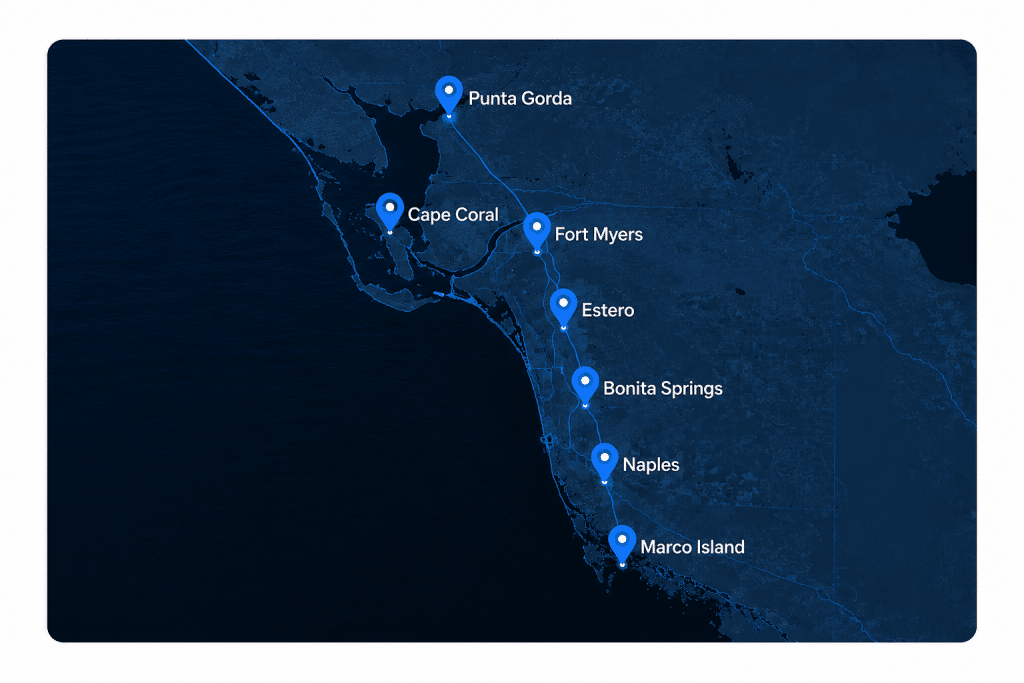
For boat owners in Naples, Marco Island, Bonita Springs, Estero, and Fort Myers, preventive maintenance can help reduce the chances that an otherwise enjoyable day on the water turns into an engine problem.
Frequently Asked Questions About Marine Diesel Maintenance
What is the most important maintenance on a marine diesel engine?
No single maintenance item protects every part of the engine. Regular oil and filter changes, clean fuel, cooling-system maintenance, raw-water impeller service, fluid checks, and routine inspections all play important roles. Follow the manufacturer’s maintenance schedule for the specific engine.
How often should marine diesel oil be changed?
Oil-change intervals vary by manufacturer and engine model and may include both engine-hour and calendar requirements. Follow the service schedule specified by the engine manufacturer rather than applying a universal interval to every marine diesel engine.
Should a marine diesel engine be serviced every year if it has low hours?
Low-hour engines can still require annual maintenance because oil, coolant, impellers, belts, hoses, batteries, fuel, and other components can deteriorate with time even when the engine isn’t being used frequently.
How do I know if my raw-water impeller needs replacing?
Don’t wait for an impeller to fail before replacing it. Follow the manufacturer’s replacement interval and inspect the impeller when appropriate. Reduced raw-water flow, rising engine temperature, or damaged/missing impeller vanes can indicate a problem.
Why is keeping diesel engine maintenance records important?
Maintenance records help track service dates, engine hours, repairs, recurring issues, and component replacement. They can make future troubleshooting easier and can also provide useful documentation of the engine’s service history.
Need Marine Diesel Maintenance in Southwest Florida?
Preventive maintenance is one of the most effective ways to improve marine diesel reliability and identify developing problems before they cause an unexpected breakdown.
ATD Marine Diesel Specialist provides mobile marine diesel maintenance, diagnostics, and repair throughout Naples, Marco Island, Bonita Springs, Estero, Fort Myers, and surrounding Southwest Florida waters.
Whether your engine is due for routine service, you’re preparing for a long trip, or you’ve noticed a change in engine performance, ATD can inspect the system and help determine what maintenance or repairs are needed.