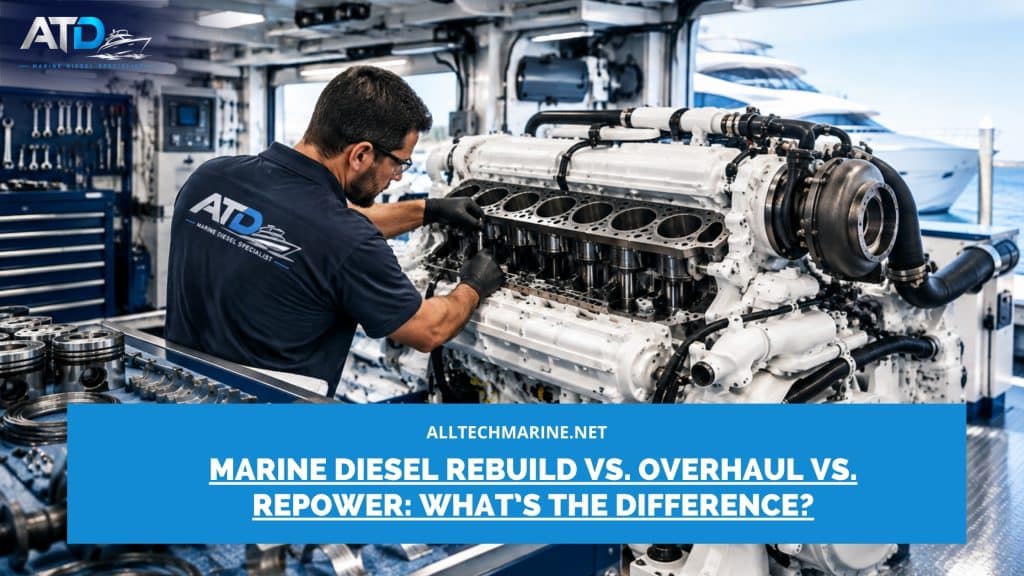
When a marine diesel engine develops serious problems, repairing the immediate issue isn’t always the only decision a boat owner faces. Depending on the engine’s condition, age, hours, service history, parts availability, and the vessel itself, it may be time to consider a rebuild, overhaul, or complete repower.
These terms are sometimes used interchangeably, but they don’t necessarily describe the same scope of work.
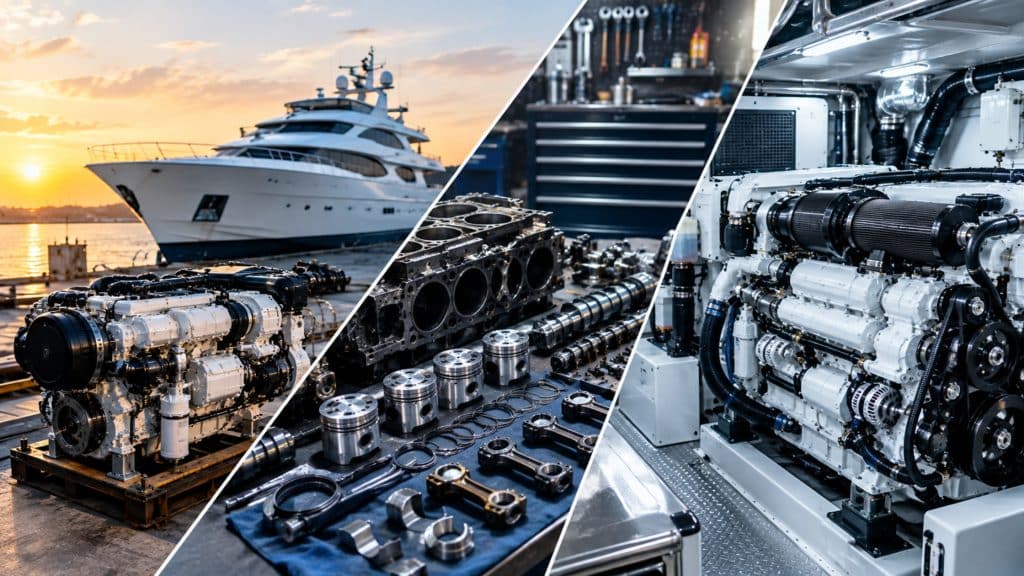
A rebuild or overhaul generally involves restoring the existing engine by inspecting and replacing worn or damaged components. A repower goes further by replacing the existing engine with another engine and potentially modifying supporting systems to accommodate it.
The right decision depends on much more than engine hours alone.
What Is the Difference Between a Marine Diesel Rebuild, Overhaul, and Repower?
A marine diesel rebuild or overhaul involves disassembling and restoring the existing engine, replacing or reconditioning components as necessary based on their condition and specifications.
A marine repower involves replacing the existing engine with another engine. Depending on the replacement engine, the project may also require changes to mounts, exhaust, cooling, fuel, electrical, controls, instrumentation, or other vessel systems.
Neither option is automatically better. The goal is to determine which approach makes the most sense for the engine, vessel, intended use, and long-term ownership plans.
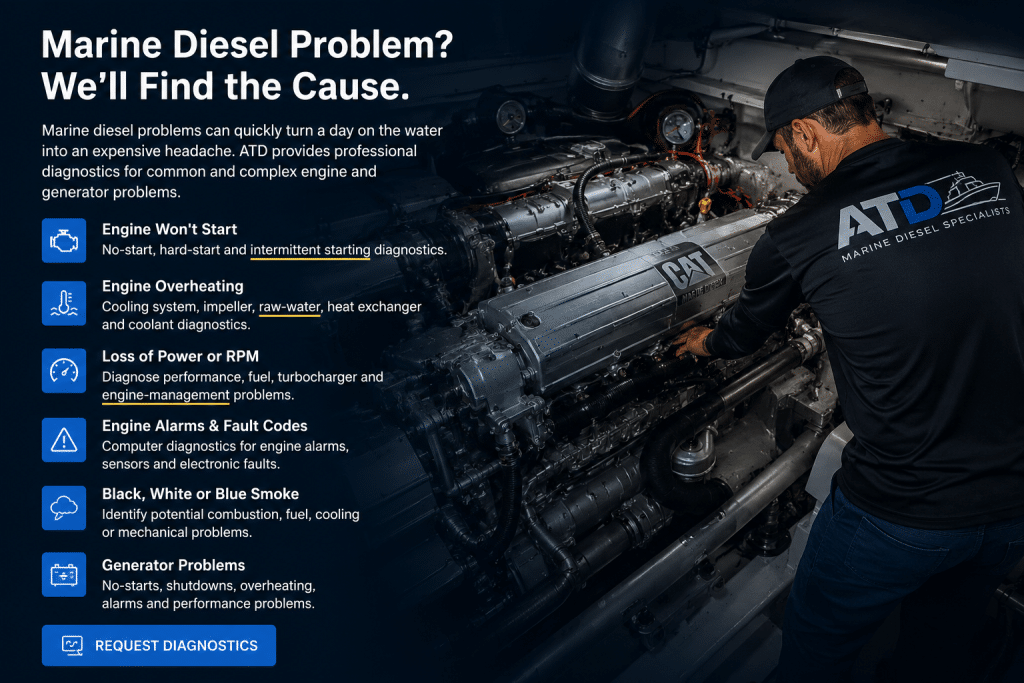
ATD provides marine diesel engine rebuilds and overhauls for diesel-powered boats and yachts throughout Southwest Florida.
What Is a Marine Diesel Engine Rebuild?
A marine diesel engine rebuild involves disassembling the engine so its internal components can be inspected, measured, repaired, reconditioned, or replaced as necessary.
The exact scope depends on the engine and its condition.
A rebuild may involve components such as:
- Pistons
- Piston rings
- Cylinder liners
- Bearings
- Connecting rods
- Cylinder head
- Valves
- Valve guides and seats
- Gaskets and seals
- Fuel-system components
- Turbocharger
- Cooling-system components
Critical components are typically evaluated against manufacturer specifications rather than simply being replaced because the engine has been disassembled.
The objective is to correct wear or damage and restore the engine to an appropriate operating condition.
What Is a Marine Diesel Engine Overhaul?
The terms rebuild and overhaul are often used differently depending on the engine manufacturer, technician, and scope of work.
In general, an overhaul involves significant disassembly, inspection, measurement, and restoration of the engine.
You may also hear terms such as:
- Top-end overhaul
- In-frame overhaul
- Major overhaul
- Complete rebuild
These do not necessarily describe identical procedures.
For example, a top-end overhaul may concentrate primarily on the cylinder head, valves, injectors, and related components without completely disassembling the lower engine.
A more extensive overhaul may involve pistons, liners, bearings, crankshaft inspection, and other major internal components.
Because terminology varies, boat owners should focus on the actual scope of work rather than the label being used.
Ask what will be disassembled, inspected, measured, reconditioned, and replaced.
What Is a Marine Diesel Repower?
A marine diesel repower replaces the vessel’s existing engine with another engine.
That sounds straightforward, but a repower can involve considerably more than removing one engine and installing another.
Depending on the replacement engine, technicians may need to evaluate or modify:
- Engine mounts
- Engine beds
- Transmission compatibility
- Gear ratio
- Shaft alignment
- Propeller requirements
- Exhaust system
- Raw-water cooling
- Fuel supply and return
- Electrical system
- Engine controls
- Instrumentation
- Wiring harnesses
- Engine-room clearances
- Air intake and ventilation
The complexity varies considerably between vessels.
Replacing an engine with the same or a closely compatible model may be substantially different from installing a newer engine with different dimensions, electronics, power output, or system requirements.
For a deeper explanation, read what is involved in a marine diesel repower.
What Are the Signs a Marine Diesel Engine May Need a Rebuild?
An engine should not be condemned based on one symptom.
Many problems that initially appear serious can result from fuel delivery, cooling, turbocharger, electrical, injector, or other repairable issues.
However, several symptoms together may justify a more thorough evaluation of the engine’s internal condition.
Potential warning signs include:
- Excessive oil consumption
- Persistent blue exhaust smoke
- Low compression
- Excessive crankcase pressure or blow-by
- Abnormal internal engine noises
- Low oil pressure
- Metal contamination in the oil
- Coolant entering the engine oil
- Repeated internal component failures
- Significant loss of performance
- Difficult starting related to compression
- Extensive internal wear
ATD’s knowledge base provides additional information about signs a marine diesel engine may need a rebuild.
These symptoms still require diagnosis. Rebuilding an engine without first establishing its actual condition can result in unnecessary expense.
Don’t Assume High Engine Hours Automatically Mean Rebuild
Engine hours matter, but they don’t tell the entire story.
Two engines with identical hours can be in very different condition.
Engine life is influenced by:
- Maintenance history
- Operating load
- Cooling-system condition
- Oil-change history
- Fuel quality
- Previous overheating
- Corrosion
- Long periods of inactivity
- Installation quality
- How the vessel has been operated
A properly maintained engine with higher hours may be in better condition than a lower-hour engine with poor maintenance or a history of overheating.
That’s why decisions about major engine work should be based on condition, not simply the number displayed on the hour meter.
How Do You Determine the Condition of a Marine Diesel Engine?
Before deciding to rebuild or repower, the engine should be evaluated systematically.
Depending on the engine and symptoms, that may include:
- Visual inspection
- Review of maintenance records
- Electronic diagnostics
- Fault-code review
- Oil-pressure testing
- Cooling-system evaluation
- Fuel-system diagnostics
- Compression-related testing
- Crankcase pressure or blow-by evaluation
- Oil analysis
- Inspection for leaks
- Sea trial or loaded operation
- Evaluation of exhaust smoke
- Inspection of related components
Professional marine diesel engine diagnostics can help determine whether the problem is isolated to a repairable component or indicates more extensive engine wear.
What Can Oil Analysis Tell You Before a Rebuild?
Oil analysis can be one useful piece of the evaluation.
A laboratory can examine an oil sample for indicators such as:
- Iron
- Copper
- Aluminum
- Chromium
- Fuel dilution
- Coolant contamination
- Water
- Soot
- Oil condition
Abnormal levels may provide clues about internal wear or contamination.
However, oil analysis should be interpreted as part of the overall engine evaluation rather than treated as a stand-alone diagnosis.
A single sample provides a snapshot. Multiple samples collected over time can be even more useful because they establish trends.
Learn more about what marine diesel engine oil analysis can tell you.
When Does Rebuilding a Marine Diesel Engine Make Sense?
A rebuild can be worth considering when the existing engine is fundamentally a good match for the vessel and can be restored economically.
Factors favoring a rebuild may include:
- The engine block and major components are serviceable
- Replacement parts remain available
- The engine has a good service reputation
- The existing installation works well
- The transmission and supporting systems are compatible and serviceable
- The owner wants to retain the existing engine configuration
- The cost and complexity of repowering would be substantially greater
- The vessel is expected to remain in service for many years
A rebuild can also avoid some of the integration challenges associated with installing a different engine.
If the existing engine fits the boat well and parts support remains strong, restoring it can be a practical option.
When Does Repowering a Boat Make Sense?
A repower becomes worth considering when replacing the engine offers meaningful advantages over investing heavily in the existing one.
Factors that may favor repowering include:
- Major components are badly damaged
- Parts are difficult or expensive to obtain
- The existing engine is obsolete
- Rebuild costs are approaching replacement costs
- The owner wants improved parts support
- Reliability requirements have changed
- The vessel will be kept long enough to justify the investment
- A compatible replacement engine is available
- The existing engine has recurring problems beyond normal wear
Repowering can also create opportunities to modernize some vessel systems.
However, the benefits should be weighed against the full project scope.
A newer engine does not automatically make a repower simple.
Rebuild vs. Repower: Key Factors to Compare
| Factor | Rebuild / Overhaul | Repower |
| Existing engine | Retained and restored | Replaced |
| Engine-room fit | Existing installation already fits | May require modifications |
| Mounts and beds | Often retained if serviceable | May require changes |
| Controls/instruments | Often retained where appropriate | May require replacement or integration |
| Exhaust/cooling | Existing systems may remain usable | Compatibility must be evaluated |
| Parts availability | Important to rebuild feasibility | Often improved with supported replacement engine |
| Project complexity | Depends on rebuild scope | Can involve multiple vessel systems |
| Original configuration | Largely preserved | May change |
| Long-term support | Depends on existing engine | Depends on replacement engine |
| Best choice | Depends on engine/vessel condition | Depends on engine/vessel condition |
The correct decision cannot be made from this table alone. A proper evaluation of the vessel and engine is necessary.
What About Replacing Only One Engine on a Twin-Engine Boat?
Twin-engine vessels introduce another consideration.
If one engine requires major work while the other remains serviceable, the owner needs to evaluate whether rebuilding or replacing only one engine will create compatibility issues.
Considerations may include:
- Horsepower
- Engine RPM range
- Transmission ratios
- Propeller setup
- Controls
- Instrumentation
- Weight
- Performance characteristics
This does not automatically mean both engines must be replaced because one has failed.
It does mean the vessel should be evaluated as a complete propulsion system rather than treating each engine entirely in isolation.
How Does the Transmission Affect a Repower Decision?
The engine and transmission need to work together.
When planning a repower, technicians should consider:
- Transmission condition
- Rated power capacity
- Gear ratio
- Input requirements
- Mounting compatibility
- Shaft speed
- Propeller requirements
If the existing transmission is not appropriate for the replacement engine, transmission work may become part of the repower.
If your vessel is already experiencing shifting, slipping, fluid, or driveline issues, those problems should also be evaluated. ATD provides marine transmission repair for marine propulsion systems.
How Does the Cooling System Affect an Engine Rebuild or Repower?
A major engine project is also an opportunity to evaluate the cooling system.
If an engine experienced repeated overheating, simply rebuilding the engine without correcting the cause of the overheating could put the restored engine at risk.
Potential cooling-system issues can include:
- Restricted heat exchangers
- Raw-water pump problems
- Damaged impellers
- Restricted strainers or intakes
- Deteriorated hoses
- Coolant problems
- Exhaust restrictions
ATD provides marine diesel cooling system service to diagnose overheating and raw-water cooling problems.
Determining why an engine failed can be just as important as repairing the damage.
How Does Fuel-System Condition Affect the Decision?
Fuel-system problems can sometimes imitate symptoms of a worn engine.
Restricted filters, contaminated fuel, injector problems, air entering the system, or insufficient fuel delivery can cause:
- Hard starting
- Reduced power
- Rough operation
- Smoke
- Poor acceleration
Before assuming the engine needs major internal work, the marine diesel fuel system should be considered during diagnosis when symptoms point in that direction.
The objective is to avoid making a major repair decision based on symptoms that originate elsewhere.
Should You Rebuild or Repower Your Marine Diesel Engine?
There isn’t a universal answer.
The decision should consider:
- Actual engine condition
- Cause of the current failure
- Condition of the block and major components
- Parts availability
- Cost and scope of rebuilding
- Cost and scope of repowering
- Transmission compatibility
- Condition of supporting vessel systems
- Vessel value and condition
- How long you plan to keep the boat
- How the vessel will be used
- Long-term serviceability
ATD’s knowledge base takes a closer look at the question should I rebuild or repower my marine diesel engine?.
The most important step is determining the engine’s actual condition before committing to either option.
Don’t Forget the Rest of the Vessel
A major propulsion investment should make sense for the boat as a whole.
Before committing to an extensive rebuild or repower, consider the condition of:
- Transmission
- Running gear
- Fuel tanks and fuel system
- Electrical system
- Exhaust system
- Cooling system
- Engine beds and mounts
- Controls
- Generator
- Hull and structural components
- Other major vessel systems
Putting a substantial amount of money into propulsion may make perfect sense for a well-maintained vessel you intend to keep.
The calculation may be different for a boat requiring major work throughout multiple systems.
Planning a Repower Before a Long-Term Ownership Period
How long you intend to own the vessel matters.
If you plan to keep the boat for many years, reliability, parts availability, serviceability, and long-term operating considerations may carry more weight.
If you expect to sell soon, the financial calculation may be different.
That doesn’t mean a rebuild or repower will automatically increase the vessel’s resale value by the amount invested.
Instead, think about the project in terms of the vessel’s overall condition, expected use, reliability requirements, and ownership plans.
Frequently Asked Questions About Marine Diesel Rebuilds and Repowers
Is it better to rebuild or replace a marine diesel engine?
Neither option is universally better. Rebuilding can make sense when the existing engine is a good fit for the vessel, major components are serviceable, and parts remain available. Repowering may make more sense when the engine is obsolete, badly damaged, difficult to support, or uneconomical to rebuild. The engine and vessel should be evaluated before making the decision.
How do I know if my marine diesel engine needs a rebuild?
Possible signs include excessive blow-by, low compression, abnormal oil consumption, persistent blue smoke, internal engine noise, low oil pressure, metal contamination, and significant internal wear. These symptoms should be properly diagnosed because fuel, cooling, turbocharger, and other problems can sometimes create similar symptoms.
Is a marine diesel overhaul the same as a rebuild?
The terms are often used interchangeably, but the exact scope can vary. A top-end overhaul, in-frame overhaul, major overhaul, and complete rebuild may involve different components. Ask for a clear description of what will be disassembled, measured, reconditioned, and replaced.
Does a repower require a new transmission?
Not necessarily. Whether the existing transmission can be retained depends on its condition, rating, gear ratio, mounting, and compatibility with the replacement engine. Transmission compatibility should be evaluated as part of repower planning.
Can you rebuild a marine diesel engine in the boat?
Some overhaul work may be possible with the engine in place depending on the engine design, vessel access, and required repairs. Other rebuilds may require engine removal. The appropriate approach depends on the engine, the work required, and the engine-room configuration.
Need a Marine Diesel Engine Evaluation in Southwest Florida?
Deciding between repairing, rebuilding, overhauling, or repowering a marine diesel engine should begin with understanding the engine’s actual condition.
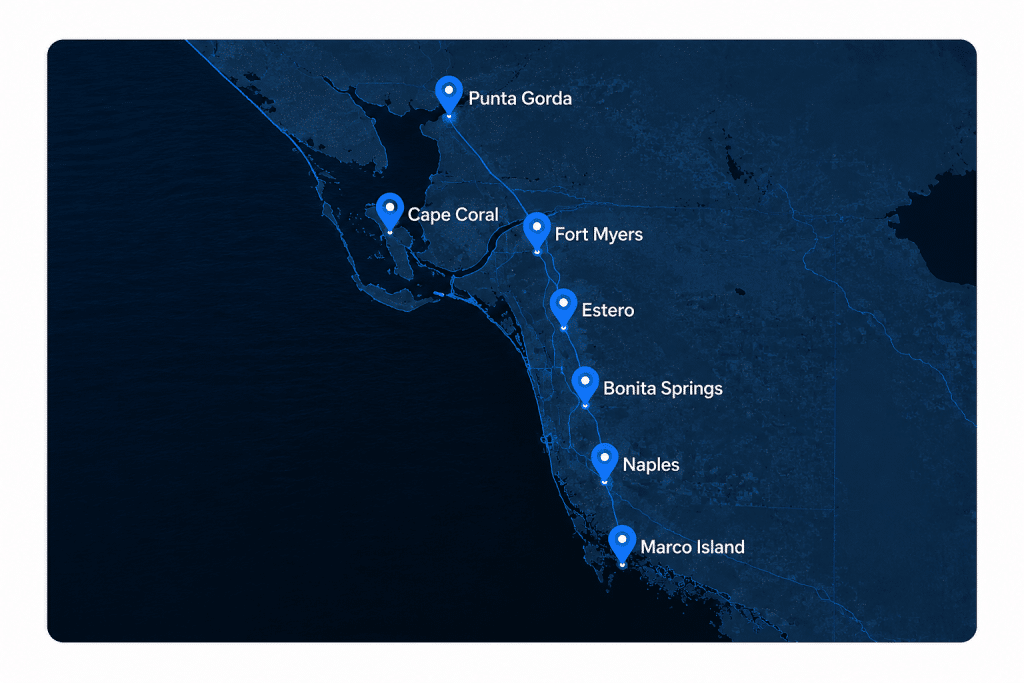
ATD Marine Diesel Specialist provides marine diesel diagnostics, rebuilds, overhauls, and repair for boat owners throughout Naples, Marco Island, Bonita Springs, Estero, Fort Myers, and surrounding Southwest Florida waters.
If your engine is experiencing major performance problems, internal wear, repeated failures, or you’re trying to determine whether rebuilding or repowering makes more sense, ATD can evaluate the engine and help identify the appropriate next step.